Ask everyone. Yes, everyone.
The tempting move is to ask only the customers who seemed thrilled. It feels harmless, and plenty of expensive software sells it as a feature. It has a name, review gating, and it's the part of this page that can actually get you in trouble.
Google's review policies prohibit selectively soliciting reviews from customers you expect to be positive. And since August 2024, the FTC's Consumer Review Rule has made deceptive review practices a matter of federal civil penalties, not just platform rules. Buying reviews sits inside that rule. So does suppressing honest negative ones.
There's a practical reason too, beyond staying legal. A profile with nothing but breathless five-star reviews reads as curated, because it is. A 4.7 with a couple of grumbles and polite replies reads like a real business run by a real person.
Ask at the right moment
The best time to ask is shortly after the job is done, while the experience is still fresh and the goodwill is real. Wait two weeks and you're a stranger asking for a favor.
The bigger win, though, is not timing. It's consistency. Strong review pages don't come from a charming ask. They come from asking every customer on the same schedule, so that nobody has to remember to.
Hear the bad news privately, first
Here's the pattern that gets you the benefit review gating pretends to offer, without breaking any rules: sequence the ask, don't filter it.
Right after the job, send a short private note asking them to rate the experience 1 to 5. A few days later, send the public review request. The second email goes out on schedule, to everyone, no matter what they said privately. That last part is what keeps it legal.
What the private step buys you is a head start. If someone rates you a 2 on Tuesday, you can call them Wednesday, hear them out, and make it right, so that when the public ask arrives on Friday they've already been heard. You didn't suppress anything. You just got there first. Sometimes the fix even becomes the story they tell in the review.
What to say
Keep it short and keep it plain. Thank them, tell them why it matters to you, give them the link. If it reads like a marketing department wrote it, keep cutting.
A perfectly good ask
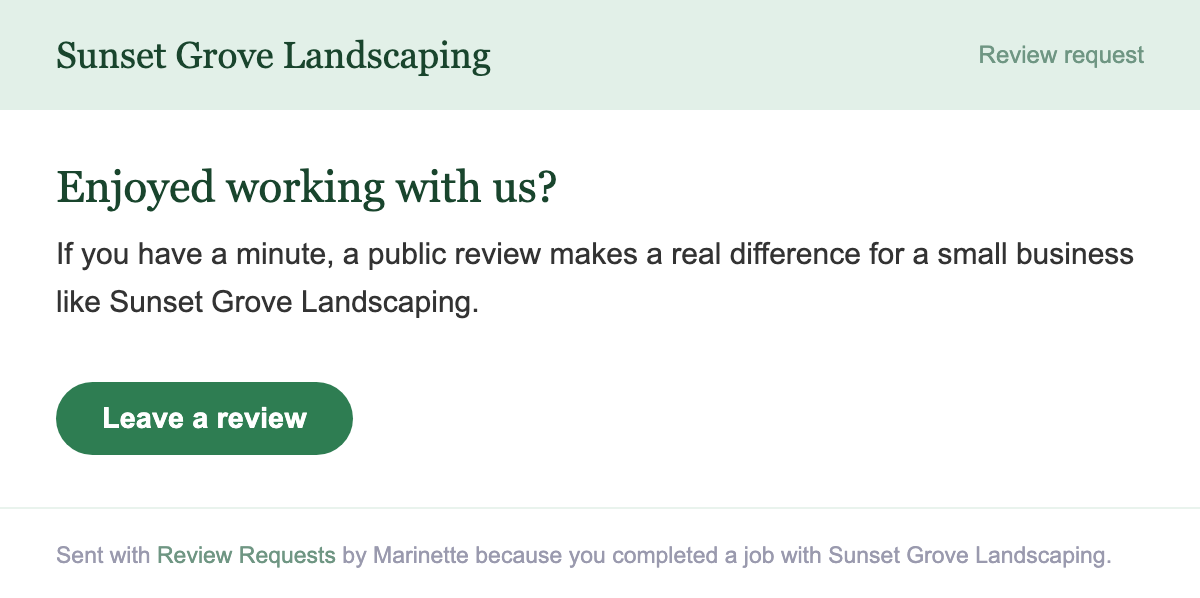
"Thanks again for choosing us. If you have a minute, a public review makes a real difference for a small business like ours. Here's the link."
Don't coach the rating or ask for five stars, and never attach a coupon. An incentivized review breaks Google's rules whether it's glowing or not, and buying reviews is precisely what the FTC's rule exists to punish. A surprise thank-you after the fact is fine. Promising one up front is where it crosses the line.
One nudge, then stop
People are busy, and one reminder is normal. Send a single follow-up about a week after the ask, say plainly that it's the only reminder, and mean it. Past that point you're not collecting reviews anymore, you're spending goodwill you already earned.
What about tools?
You can run all of this by hand with a spreadsheet and a calendar reminder, and plenty of businesses do until they forget for a month. If you'd rather have software do the remembering, hold it to the same rules you hold yourself to. It should ask everyone on a fixed schedule, and it should never gate the public ask on private feedback. It also shouldn't cost more than the problem it solves, which is worth saying out loud because the dedicated review platforms start around $75 a month.